THE STATLER BROTHERS BUILT PERFECT HARMONIES — THEN HID INSIDE A FAKE BAND THAT COULD BARELY HOLD ITSELF TOGETHER.
Some groups spend years trying to sound polished.
The Statler Brothers were polished enough to sound terrible on purpose.
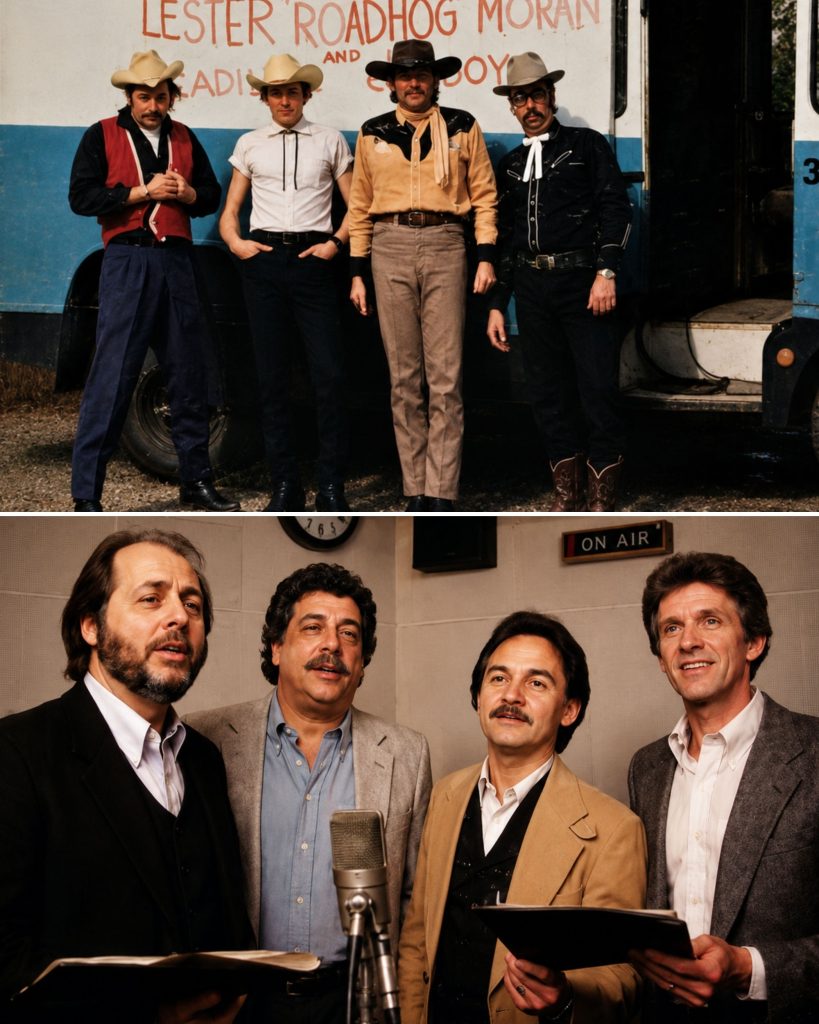
Harold Reid, Don Reid, Phil Balsley, and Lew DeWitt had built one of country music’s cleanest harmony sounds. Four voices from Staunton, Virginia, shaped by gospel singing, small-town timing, and years beside Johnny Cash.
They could stand almost still and make a room feel like church, family, memory, and old radio all at once.
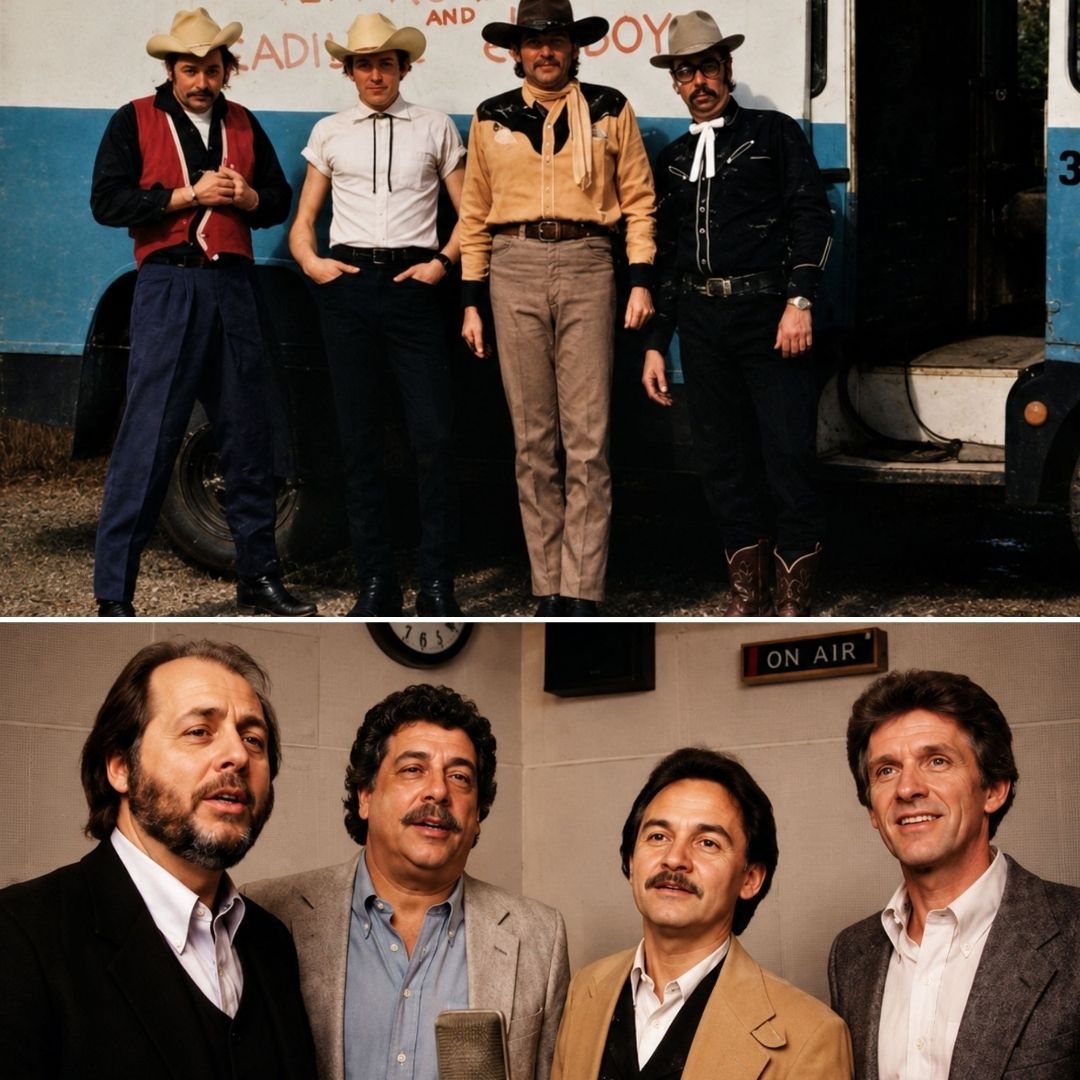
Then they invented Lester “Roadhog” Moran and the Cadillac Cowboys.
A fake band.
A bad one.
And somehow, that was part of the genius.
Roadhog Was Everything The Statlers Were Not
That was the joke.
The Statler Brothers were precise.
Roadhog was sloppy.
The Statlers had elegant blend.
Roadhog sounded like a backwoods radio broadcast trying not to fall through the floor.
The Statlers could make harmony feel effortless.
Roadhog made effort sound like a public emergency.
It was loud, crooked, ridiculous, and somehow affectionate.
Not outsiders laughing at country people.
Country people laughing at their own porch.
The Comedy Came From Knowing The World
That is why it worked.
The Statlers knew the places they were teasing. The church basement. The local talent show. The small-town announcer with too much confidence. The band that thought it was one good break away from glory, even though the tuning said otherwise.
They were not punching down.
They were remembering.
Roadhog felt funny because it came from a world the Statlers understood too well to fake.
Bad Singing Takes Skill When You Can Actually Sing
That is the hidden craft.
Anybody can miss a note by accident.
The Statlers missed it with timing.
They knew exactly how far to bend the joke before it broke. The rhythm had to wobble without collapsing. The voices had to sound wrong in a way that still proved the men behind them were completely in control.
That is harder than it looks.
Comedy in music works only when the musicians know what they are destroying.
The Statlers knew.
The Fake Band Protected A Real Truth
Roadhog also showed something important about them.
The Statler Brothers were never only smooth singers in matching suits. They were storytellers, character actors, small-town humorists, and men who understood that memory is not always sentimental.
Sometimes it is absurd.
Sometimes it is off-key.
Sometimes the people you love most are the ones who cannot sing nearly as well as they think they can.
Roadhog let them keep that part of country life alive.
What Lester “Roadhog” Moran Really Leaves Behind
The deepest part of this story is not that The Statler Brothers created a funny alter ego.
It is that they were so good they could afford to sound bad.
Four master harmonizers.
A fake terrible band.
A joke built from church basements, county stages, and small-town radio static.
A comedy act that worked because the love underneath it was real.
And somewhere inside those deliberately crooked notes was the proof of their control:
The Statler Brothers did not stumble into bad music.
They built it carefully enough to make everyone hear how good they really were.