Hinh website 2026 04 25T154929.891
“Scroll down to the end of the article to listen to music.”

He Had No Time To Be Noble — Only Time To Decide

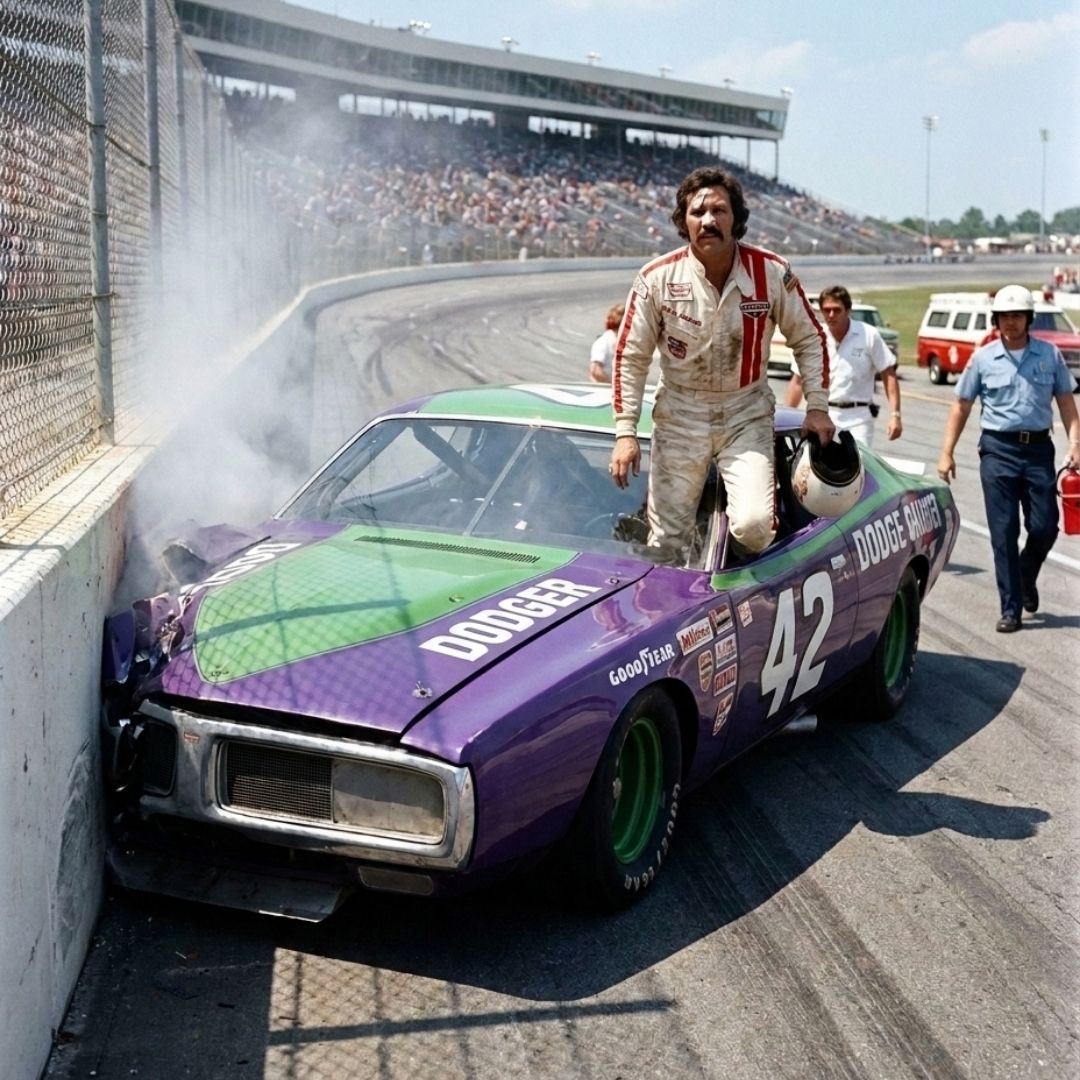
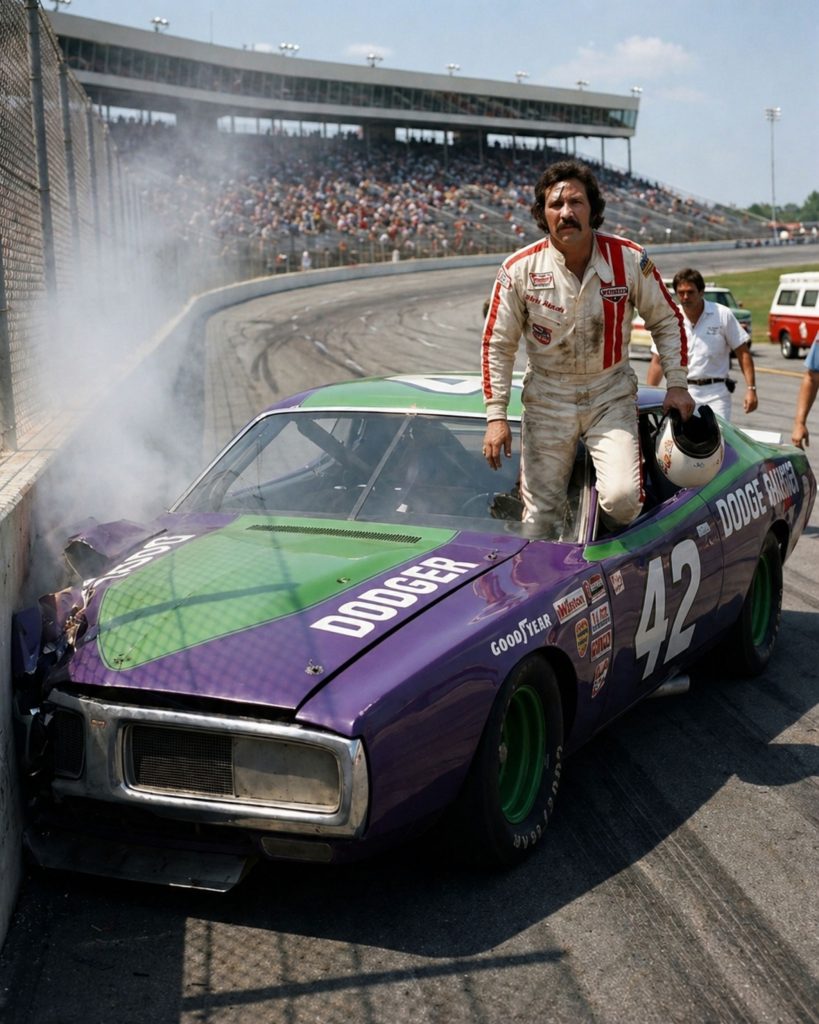
Charlotte Motor Speedway, 1974.

Richard Childress’s car was stopped across the track, and Marty Robbins was coming at him fast enough for instinct to matter more than thought. At that speed, there were no clean choices left. He could stay on line and risk driving straight into another man. Or he could turn himself into the concrete.

Marty chose the wall.

The crash tore up his car and sent him to the hospital with serious injuries, including facial stitches. Childress lived, and later made it clear he believed Marty’s decision may have saved him. In racing, people often talk about courage through trophies, finishes, and checkered flags. This story lives somewhere else entirely — in the split second when a man chose damage for himself over death for somebody else.

He Was Already A Star — Which Makes The Choice Even Clearer

By then, Marty Robbins did not need a racetrack to prove he was fearless.

He was already one of country music’s biggest names, with the kind of voice and catalog that could have kept him safely inside the world of concerts, records, and television appearances. Racing was not his livelihood. It was part passion, part appetite, part refusal to live carefully just because success had given him reasons to.

That matters here.

Because the moment at Charlotte was not about a desperate man trying to make a name for himself. Marty already had one. He was there because he genuinely loved racing — enough to put his body in the same danger as men who did it full-time, and enough to make a brutal decision when the danger finally arrived.

The Turn Of The Wheel Said More Than Any Speech Could

A lot of heroic stories get polished after the fact.

This one does not need much polishing.

There was no time for Marty Robbins to look brave. No chance to calculate how the moment would be remembered. No crowd he could impress by making the “right” moral choice in public. He saw another driver in a helpless position and turned away from him.

That is why the story carries so much weight.

It was pure reflex, but not empty reflex. Something in him made the decision instantly: if one car was going to take the punishment, it would be his.

Richard Childress Never Forgot What He Believed Happened

The emotional center of the story does not come only from the crash itself. It also comes from what Childress took from it afterward.

When the other driver believes your decision may have saved his life, the wreck stops being just another violent afternoon in motorsport history. It becomes personal. One man carried the injuries. The other man carried the knowledge that somebody may have taken those injuries in his place.

That changes the memory of the event.

Not into sentiment.
Into respect.

The kind that lasts because it was earned under pressure, with no room for performance.

He Walked Away Without Trying To Turn It Into Myth

What makes Marty Robbins even more compelling in stories like this is how naturally they fit the shape of his life.

He could be glamorous onstage, elegant in song, polished in the public imagination. But underneath that was a man with a serious appetite for speed, risk, and living fully. He went back to racing after heart trouble. He kept stepping into dangerous spaces long after he had enough success to avoid them. And when one of the biggest moments of his racing life came, it was not a win.

It was a sacrifice.

He did not turn the crash into a grand speech about character.
He did not ask to be celebrated for it.
He hit the wall, got hurt, and kept moving.

What The Story Leaves Behind

Marty Robbins is usually remembered through songs first — the velvet phrasing, the western ballads, the romance, the drama, the voice that could turn a room still.

But the racetrack tells you something else about him.

Under pressure, with almost no time and no safe option left, he chose the path that protected another man. He paid for it with wreckage, pain, and a hospital stay. He never needed applause for that choice.

Some men become larger because of what they say.

Marty Robbins became larger in this story because of what he did in less than a second.

Video

Related Post

TOBY KEITH WASN’T THERE WHEN THE DERBY GATES OPENED — BUT HIS NAME WAS STILL ON A HORSE TRYING TO RUN FOR HIM. Churchill Downs was never quiet on Derby day. Hats. Cameras. Million-dollar horses moving like thunder under silk colors. The whole place dressed up for speed, money, luck, and heartbreak. But in 2025, one name carried a different kind of weight. Render Judgment. The horse came to the Kentucky Derby backed by Dream Walkin’ Farms, the racing dream Toby Keith had built far away from the stage lights. He was not there to walk the backside. Not there to stand by the rail. Not there to grin beneath a cowboy hat while the announcer called the field. Toby had been gone for more than a year. Still, the dream showed up. That is the strange thing about horses. They do not care how famous you were. They do not slow down because the owner is a legend. They do not know grief the way people know it. They only run. For Toby, racing had never been a side hobby with a celebrity name attached. He loved the barns, the breeding, the waiting, the brutal patience of it. A song can hit in three minutes. A horse takes years. Render Judgment was not just a Derby entry. It was a piece of unfinished business moving toward the gate without the man who had imagined it. When the doors opened, Toby Keith could not hear the crowd. He could not see the dirt kick up. He could not watch the horse break into the first turn. But his name was still there, tucked into the story, running on four legs after the voice was gone. What does it mean when a man dies before his dream reaches the starting line — and the dream runs anyway?

BEFORE TOBY KEITH SOLD 40 MILLION RECORDS, HE WAS JUST A BOY LISTENING TO MUSICIANS IN HIS GRANDMOTHER’S SUPPER CLUB. The first stage Toby Keith studied was not in Nashville. It was in Fort Smith, Arkansas, inside Billy Garner’s Supper Club — the kind of place where grown men came in tired, women laughed too loud, smoke hung low, and music did not feel like entertainment as much as survival. Toby was just a kid then. Not a star. Not a brand. Not the man who would one day fill arenas and argue with record labels and make entire stadiums raise red cups in the air. Just a boy watching working musicians do the job. They loaded in their own gear. They played for people who had already worked all day. They knew how to hold a room without looking like they were trying. There was no glamour in it, and maybe that was the lesson. Country music was not something shiny hanging above him. It was right there on the floor. His grandmother ran the place. Around the house, she was called Clancy. Years later, Toby turned that memory into “Clancy’s Tavern,” changing the name but not the truth of the room. He said there was nothing made up in the song. That matters. Because some artists invent where they come from after they get famous. Toby Keith spent his whole career trying not to lose the room where he first understood the deal: sing plain, stand firm, make the working people believe you are one of them because you are. Before the oil fields, before the first hit, before Nashville tried to smooth him down, there was that supper club. A boy in the corner. A grandmother behind the business. A band playing through the noise. And maybe the reason Toby Keith always sounded so sure of himself is because he learned early that country music was not born under a spotlight. Sometimes it starts beside a bar, when a kid is quiet enough to hear his whole future hiding inside someone else’s song.

You Missed

TOBY KEITH WASN’T THERE WHEN THE DERBY GATES OPENED — BUT HIS NAME WAS STILL ON A HORSE TRYING TO RUN FOR HIM. Churchill Downs was never quiet on Derby day. Hats. Cameras. Million-dollar horses moving like thunder under silk colors. The whole place dressed up for speed, money, luck, and heartbreak. But in 2025, one name carried a different kind of weight. Render Judgment. The horse came to the Kentucky Derby backed by Dream Walkin’ Farms, the racing dream Toby Keith had built far away from the stage lights. He was not there to walk the backside. Not there to stand by the rail. Not there to grin beneath a cowboy hat while the announcer called the field. Toby had been gone for more than a year. Still, the dream showed up. That is the strange thing about horses. They do not care how famous you were. They do not slow down because the owner is a legend. They do not know grief the way people know it. They only run. For Toby, racing had never been a side hobby with a celebrity name attached. He loved the barns, the breeding, the waiting, the brutal patience of it. A song can hit in three minutes. A horse takes years. Render Judgment was not just a Derby entry. It was a piece of unfinished business moving toward the gate without the man who had imagined it. When the doors opened, Toby Keith could not hear the crowd. He could not see the dirt kick up. He could not watch the horse break into the first turn. But his name was still there, tucked into the story, running on four legs after the voice was gone. What does it mean when a man dies before his dream reaches the starting line — and the dream runs anyway?

BEFORE TOBY KEITH SOLD 40 MILLION RECORDS, HE WAS JUST A BOY LISTENING TO MUSICIANS IN HIS GRANDMOTHER’S SUPPER CLUB. The first stage Toby Keith studied was not in Nashville. It was in Fort Smith, Arkansas, inside Billy Garner’s Supper Club — the kind of place where grown men came in tired, women laughed too loud, smoke hung low, and music did not feel like entertainment as much as survival. Toby was just a kid then. Not a star. Not a brand. Not the man who would one day fill arenas and argue with record labels and make entire stadiums raise red cups in the air. Just a boy watching working musicians do the job. They loaded in their own gear. They played for people who had already worked all day. They knew how to hold a room without looking like they were trying. There was no glamour in it, and maybe that was the lesson. Country music was not something shiny hanging above him. It was right there on the floor. His grandmother ran the place. Around the house, she was called Clancy. Years later, Toby turned that memory into “Clancy’s Tavern,” changing the name but not the truth of the room. He said there was nothing made up in the song. That matters. Because some artists invent where they come from after they get famous. Toby Keith spent his whole career trying not to lose the room where he first understood the deal: sing plain, stand firm, make the working people believe you are one of them because you are. Before the oil fields, before the first hit, before Nashville tried to smooth him down, there was that supper club. A boy in the corner. A grandmother behind the business. A band playing through the noise. And maybe the reason Toby Keith always sounded so sure of himself is because he learned early that country music was not born under a spotlight. Sometimes it starts beside a bar, when a kid is quiet enough to hear his whole future hiding inside someone else’s song.